
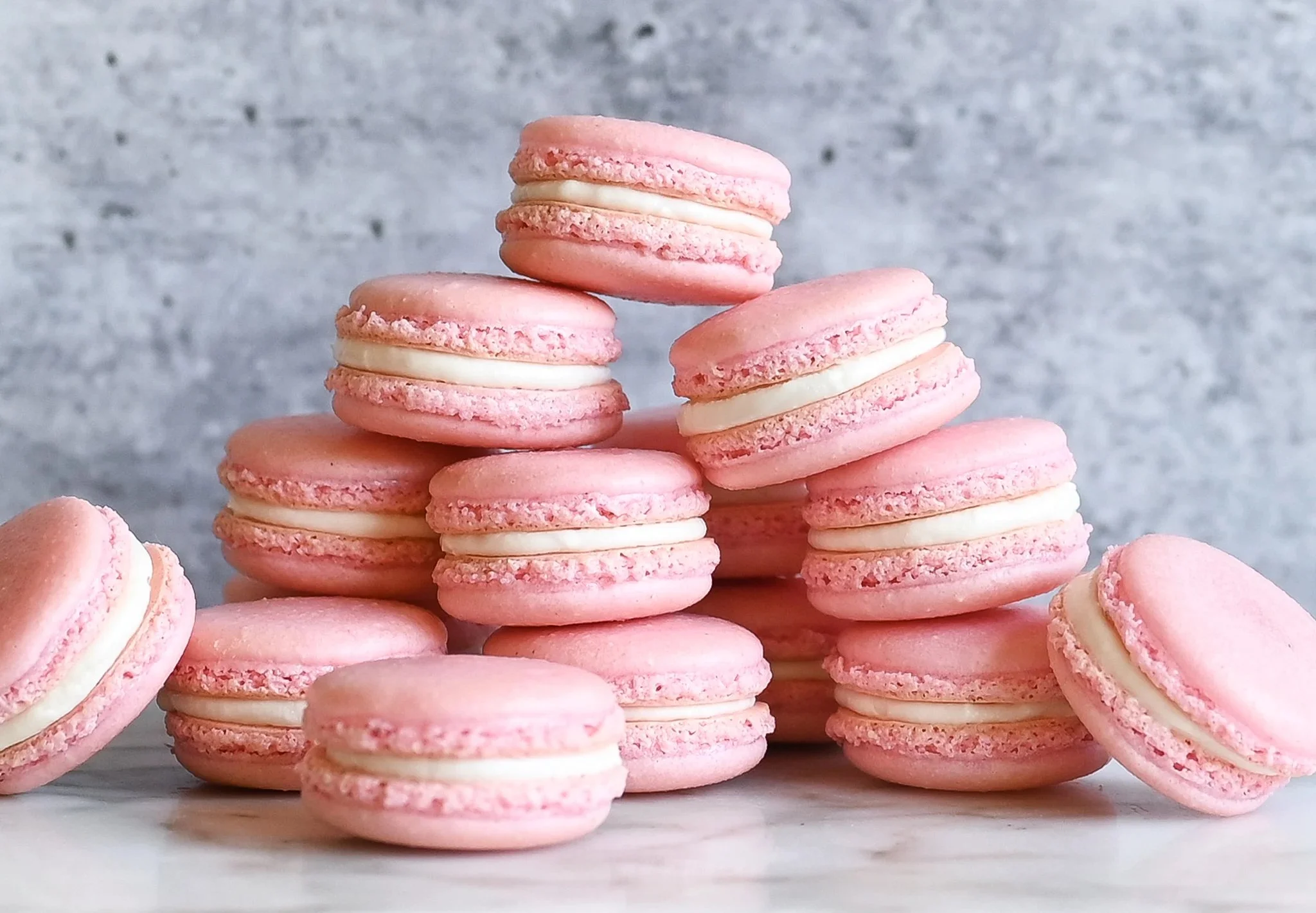
French Macarons are delicate and elegant treats that have captured the hearts of dessert lovers around the world. With their silky smooth tops, crisp shells, and luscious fillings, these French confections evoke joy and nostalgia with every bite. Whether you’re preparing them for a special occasion or simply indulging yourself, making French macarons can be a delightful culinary adventure. This Recipe shows you how to create these irresistible sweets in a Step-by-Step manner you’ll find easy to follow.
Ingredients
Let’s gather the essential ingredients that will be transformed into delightful French macarons. You will need:
- 105 grams finely sifted or super-fine almond flour: This gives the macaron its unique texture, along with a subtle nutty flavor.
- 105 grams confectioners’ sugar: Sweet and powdery, it brings a delicate sweetness to each bite.
- 100 grams egg whites (from approximately 3 large eggs): These aerate and provide structure, contributing to that iconic fluffy interior.
- 100 grams granulated sugar: This white sugar aids in stabilizing the meringue.
- 1 teaspoon vanilla bean paste: This adds a rich, aromatic vanilla flavor, making each macaron taste divine.
- 1 to 2 drops gel paste food color: A splash of color will make your macarons visually stunning!
- Filling of choice: You can get creative with flavors—think buttercream, ganache, or fruit purée.
Make sure you have the right tools: a heavy-duty stand mixer, a digital scale for accurate measurements, a pastry bag with a ¼ or ½-inch tip, and parchment paper or a Silpat baking mat/template to assist with baking.
Step-by-Step Directions
Step 1: Prepare Your Equipment
Begin by filling a small saucepan with about 1 inch (2.5 cm) of water. Bring it to a gentle simmer over medium-low heat. You’ll need to line two baking sheets (13 x 18 inches or 33 x 46 cm) with parchment paper or Silpat mats.
Step 2: Prepare the Pastry Bag
Take your pastry bag fitted with a ¼ or ½-inch tip and place it in a wide glass, ensuring that the tip is at the bottom. This will prevent any batter from spilling out. Fold the bag over the rim of the glass for easier filling.
Step 3: Sift Your Dry Ingredients
In a large bowl, sift the almond flour and confectioners’ sugar together through a fine sieve. Alternatively, if the almond flour is coarse, whisk both together and rub out lumps with your fingers.
Step 4: Create the Meringue
In the bowl of your stand mixer, combine the egg whites and granulated sugar. Place this bowl over your saucepan of simmering water, ensuring that the bottom is not touching the water. Whisk constantly for about 2 minutes, until the sugar is dissolved and the egg whites feel warm to the touch.
Step 5: Whip the Egg Whites
Remove the bowl from the heat and attach it to your stand mixer fitted with the whisk attachment. Mix on medium-high speed until the meringue reaches glossy stiff peaks, which usually takes around 6 to 8 minutes. You’ll know it’s ready when the peaks hold straight up when you lift the whisk.
Step 6: Combine Mixtures
Pour the sifted almond flour and confectioners’ sugar mixture into the bowl with the meringue. Add the vanilla bean paste and food color. Gently fold together using a rubber spatula. At this point, the batter will be thick.
Step 7: Macaronage Technique
Continue folding until the batter resembles a shiny, lava-like consistency. This technique is called “macronage.” It’s essential to get this right for the perfect texture; you should be able to create figure 8s with the batter without it breaking.
Step 8: Pipe the Macarons
Transfer the batter to your pastry bag. Hold the bag perpendicular to the lined baking sheets, about ½ inch (13 mm) above the surface, and pipe out 1¼-inch (3 cm) rounds. Tap each tray on the countertop to release any air bubbles. If needed, pop any remaining bubbles with a toothpick.
Step 9: Let the Shells Rest
Allow the piped macarons to rest for about 20 minutes, until they develop a slight skin and are no longer sticky.
Step 10: Bake the Macarons
Preheat your oven to 325°F (165°C). Bake one pan at a time for 12 to 14 minutes, until the tops are shiny and crisp. Let them cool completely on wire racks.
Step 11: Fill the Macarons
Prepare your filling of choice. Once the macaron shells are cool, carefully remove them from the parchment paper, turn half of them over, and pipe or spoon about 2 teaspoons of filling onto the upside-down shell. Gently press another shell on top to spread the filling to the edges.
Step 12: Store the Macarons
Store the filled macarons in a covered container in the refrigerator for up to 2 days. Remember to bring them to room temperature before serving for the best flavors and textures.
Tips & Tricks
To achieve perfectly shiny and smooth macaron tops, ensure that your mixing bowl and utensils are grease-free. Experiment with different colors and flavors in your fillings to make these macarons your own. A common pitfall is to overmix the batter, which can result in flat macarons, so always be cautious during the macronage stage!
Serving Suggestions & Pairings
Serve your French macarons at a tea party, as delightful wedding favors, or as a chic dessert for larger gatherings. Pair them with a cup of freshly brewed tea, coffee, or even a glass of sparkling lemonade for a festive touch. Their vibrant colors and flavors make them a show-stopping addition to any dessert table.
Nutritional Information
Each French macaron contains approximately 100 calories, depending on the filling you choose. They are not overly rich, making them an excellent moderate indulgence. Balancing them with fresh fruit or a light beverage can enhance both your experience and nutrition.
Storing Tips & Variations
To store your macarons, keep them in a sealed container in the refrigerator for up to two days. You can also freeze them for longer storage; just make sure they are well-wrapped to prevent freezer burn. When thawing, allow them to come to room temperature for optimal taste. For variations, consider infusing your fillings with different flavors, such as lavender, lemon curd, or seasonal fruit jams.
Conclusion
With their colorful allure and delightful textures, French macarons are a treat that’s worth mastering. We encourage you to try this recipe and delight your taste buds—the joy of creating and savoring these sweets is unmatched. Don’t forget to share your experiences and variations!
FAQs
1. Can I use any food color for macarons?
Yes, gel paste food color is the best choice, as it doesn’t add extra liquid to the batter.
2. Why did my macarons crack?
Cracking usually occurs from overmixing or not allowing enough resting time before baking. Ensure a proper macronage and let them rest until a skin forms.
3. Can I prepare the filling ahead of time?
Absolutely! You can prepare most fillings in advance, just store them in an airtight container until you’re ready to use them.
4. What can I do with leftover egg yolks?
Leftover egg yolks can be used in custards, ice creams, or rich cakes. They can also be frozen for later use.
5. Can I make macarons in different sizes?
While traditional macarons are made at a specific size, you can certainly make larger or smaller ones; just be sure to adjust baking time accordingly!
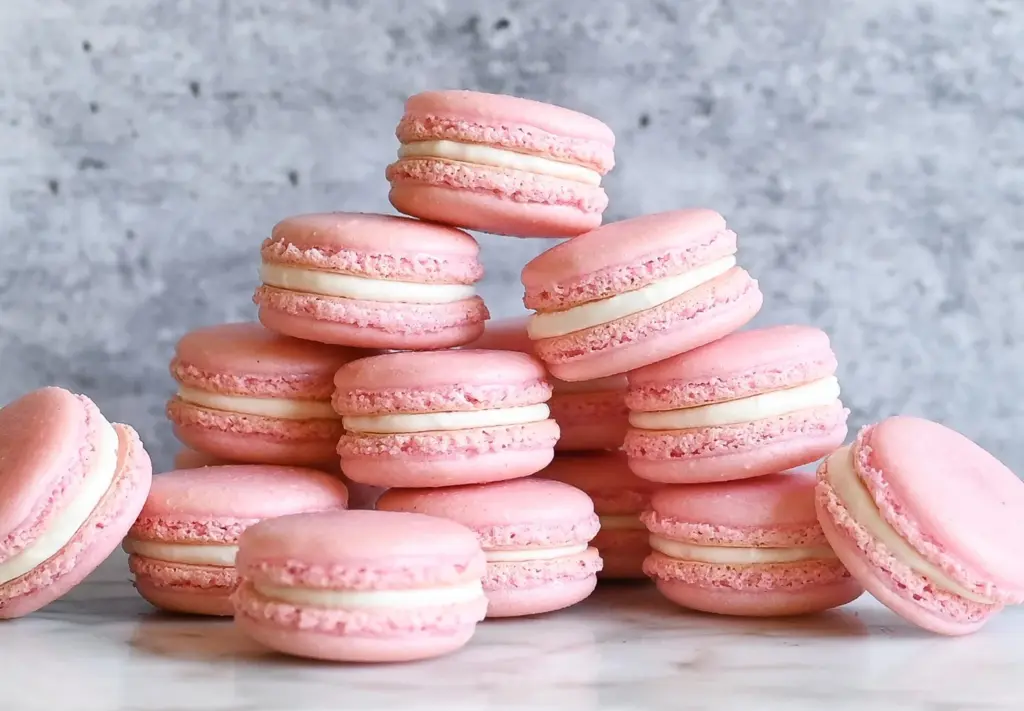
French Macarons
Ingredients
Method
- Fill a small saucepan with about 1 inch of water and bring to a gentle simmer. Line two baking sheets with parchment paper or Silpat mats.
- Using a pastry bag fitted with a ¼ or ½-inch tip, place it in a wide glass to prevent batter from spilling. Fold the bag over the rim of the glass for easier filling.
- Sift almond flour and confectioners’ sugar together through a fine sieve in a large bowl.
- Combine egg whites and granulated sugar in a bowl over simmering water and whisk for about 2 minutes until the sugar is dissolved and the mixture feels warm.
- Remove the bowl from heat and beat the meringue with a stand mixer on medium-high speed for about 6 to 8 minutes until glossy stiff peaks form.
- Fold the sifted almond flour and confectioners’ sugar mixture into the meringue along with vanilla bean paste and food color until combined.
- Continue folding until the batter is shiny and flows like lava for perfect texture.
- Transfer the batter to the pastry bag, hold it perpendicular to the baking sheets, and pipe 1¼-inch rounds.
- Tap each tray on the countertop to release air bubbles and pop any remaining bubbles with a toothpick.
- Let piped macarons rest for about 20 minutes until they develop a slight skin.
- Preheat the oven to 325°F (165°C) and bake each pan for 12 to 14 minutes, until tops are shiny and crisp.
- Cool macarons completely on wire racks.
- Once the macaron shells are cool, carefully remove them from the baking sheet, turn half over, and pipe or spoon about 2 teaspoons of filling onto each upside-down shell.
- Gently press another shell on top to spread the filling.
- Store filled macarons in a covered container in the refrigerator for up to 2 days.

Leave a Reply