
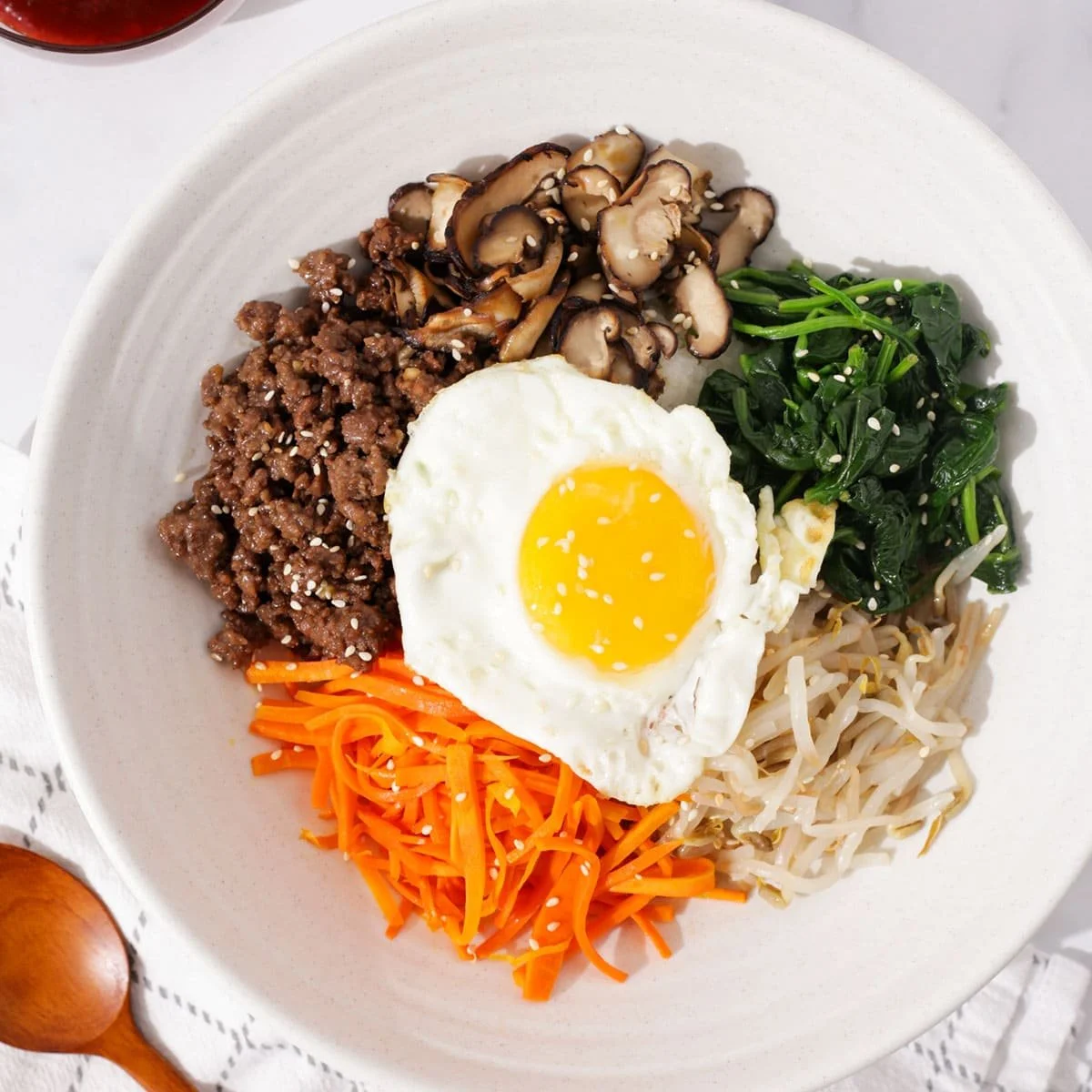
Easy Bibimbap, a delightful Korean mixed rice bowl, is a vibrant and satisfying dish that combines a medley of fresh vegetables, aromatic beef, and a beautiful fried egg, all finished off with a spicy gochujang sauce. This recipe is not only incredibly easy to make but also deeply comforting and wholesome, making it perfect for family dinners or a quick weeknight meal. With its colorful presentation and exciting flavors, Easy Bibimbap is sure to take you on a sensory journey reminiscent of meals shared with loved ones.
Ingredients
To prepare this delicious Easy Bibimbap, gather the following fresh and flavorful ingredients:
- ¼ cup gochujang (Korean red chili paste): This spicy and savory paste adds a unique depth of flavor.
- 2 tablespoons honey (or sugar): A touch of sweetness to balance the spice.
- 1 teaspoon minced garlic: For that aromatic kick that makes the dish memorable.
- 1 teaspoon toasted sesame oil: Adds a rich, nutty aroma.
- 8 ounces mung bean sprouts (or soy bean sprouts): Crunchy and refreshing, they add texture.
- ½ teaspoon salt: Essential for seasoning.
- 1 tablespoon toasted sesame oil: Enhances the flavor profile of your bean sprouts.
- 10 ounces baby spinach: Tender and nutrient-packed.
- ¼ teaspoon salt: Again for seasoning.
- ½ tablespoon toasted sesame oil: To give the spinach a lovely finish.
- 1 large carrot (peeled and cut into juliennes/thin matchsticks): Sweet and crunchy.
- 2 teaspoons toasted sesame oil: For flavorful carrot preparation.
- 1 teaspoon salt: To taste.
- 8 ounces mushrooms (sliced, shiitake recommended): Earthy and umami-rich.
- ½ teaspoon salt: Mellowing the flavor of the mushrooms.
- 1 teaspoon toasted sesame oil: To finish sautéing the mushrooms nicely.
- 1 pound ground beef (80/20 recommended): Juicy and savory as the protein of the dish.
- ¼ cup soy sauce: Provides a savory depth.
- ¼ cup honey: A sweeter contrast to the soy sauce.
- 1 tablespoon minced garlic: An essential aromatic.
- 2 teaspoons toasted sesame oil: Creates a cohesive flavor throughout.
- 3 cups cooked white rice: The hearty base of your bibimbap.
- 3 large eggs: Essential for that delicious fried egg topping.
- Green onion (thinly sliced, optional for garnish): Adds a fresh crunch.
- Toasted sesame seed (optional for garnish): For that extra touch of flavor.
- Oil (as needed for cooking): Use your preferred cooking oil.
Step-by-Step Directions
Begin your culinary adventure by first mixing the gochujang, honey, minced garlic, and sesame oil in a bowl. Combine until well blended and set this heavenly sauce aside for later.
Next, bring a pot of water to a boil.
Bean Sprouts
Add the mung bean sprouts to the boiling water for 2 to 3 minutes. You’ll see them become translucent. Remove them with a strainer and cool them down under cold running water. Once chilled, squeeze the sprouts firmly to remove excess moisture. Season them with salt and sesame oil, then set aside.
Spinach
In the same pot of boiling water, toss in the baby spinach for about 30 seconds until wilted and bright green. Drain and lick the cold water over them to stop the cooking. Squeeze out any excess water, season with salt and sesame oil, and let the spinach rest.
Ground Beef
Now, make the beef sauce by mixing soy sauce, honey, minced garlic, and sesame oil. In a medium pan over medium heat, add the ground beef and cook until it turns brown and no longer pink. Depending on your beef’s fat content, drain the excess grease. Stir in the sauce and let it simmer for about 5 minutes until it reduces slightly. Keep the beef warm.
Mushrooms
In a different pan, heat a couple of tablespoons of oil over medium-high heat. Once hot, add your sliced mushrooms seasoned with salt. Sauté them until tender, then finish with a sprinkle of sesame oil. Remove from heat and set aside.
Carrots
Using the same pan, add a couple more tablespoons of oil over medium-high heat. Toss in the julienned carrots seasoned with a touch of salt. Cook until they are just tender and finish with sesame oil before setting aside.
Fry the Eggs
In the same pan, turn your heat to medium-high, and add some oil. Fry your eggs until the whites are set, ensuring they remain runny in the center for that perfect bite. Remove them from the pan and remember to wipe it if needed to prevent any residual flavors.
Assemble Your Bowls
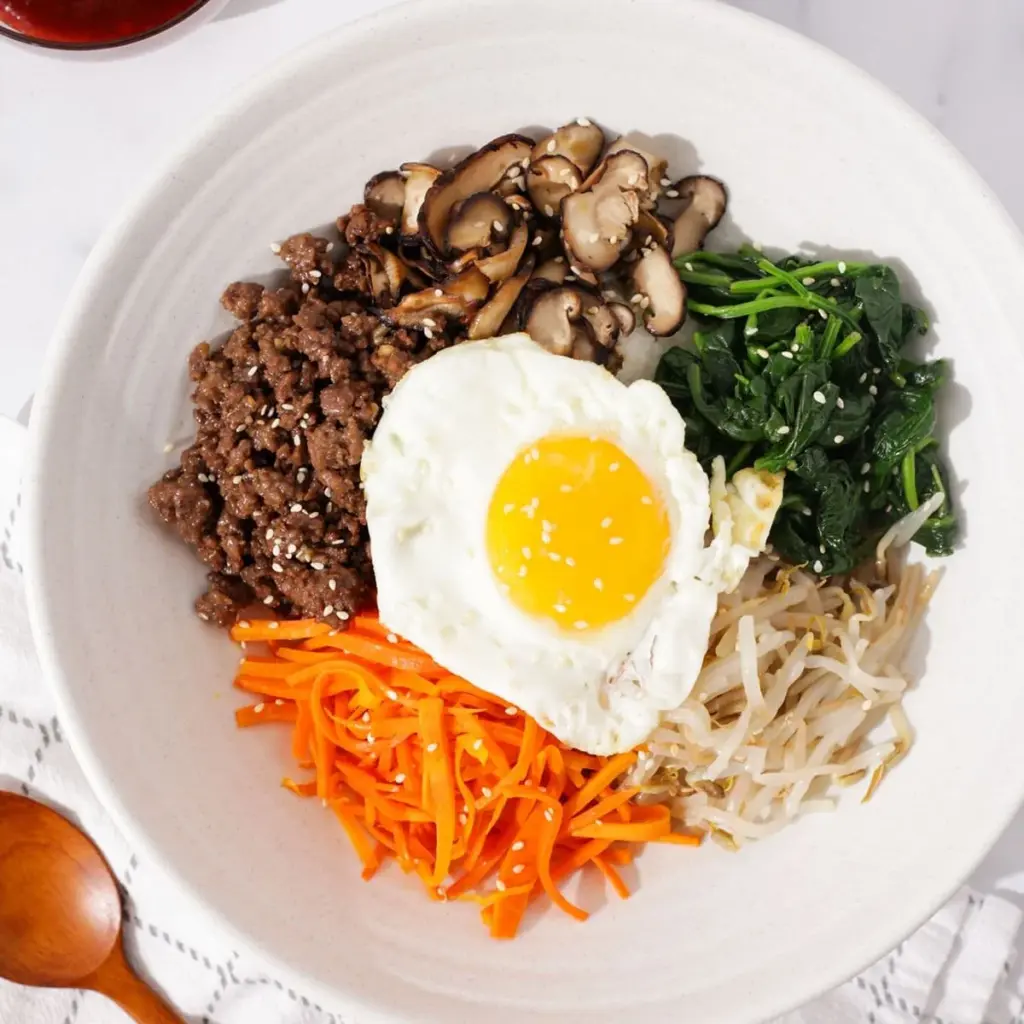
Now it’s time to assemble your Easy Bibimbap. For each bowl, start with a generous scoop of cooked rice. Artfully arrange the cooked bean sprouts, spinach, mushrooms, carrots, and the savory ground beef around the rice. Crown your bowl with a warm fried egg and optional garnishes like green onions and toasted sesame seeds. Drizzle your prepared gochujang sauce over the top and mix everything together before diving in!
Tips & Tricks
For a heartier meal, feel free to customize the toppings with your favorite vegetables or protein options. You can also make your bibimbap vegetarian by replacing beef with tofu or tempeh. Another tip is to prepare all your ingredients beforehand; this will streamline your cooking process and make serving more enjoyable. And don’t be afraid to adjust the spiciness of the gochujang based on your preference.
Serving Suggestions & Pairings
Easy Bibimbap can hold its own as a standalone meal, but it also pairs beautifully with miso soup, kimchi, or pickled vegetables. This dish is perfect for casual gatherings, family dinners, or even meal prep as leftovers taste just as good. Serve it at a Korean-themed dinner party for an authentic experience that will wow your guests.
Nutritional Information
A typical serving of Easy Bibimbap amounts to about 600-700 calories, packed with protein, healthy fats, and vibrant vegetables. The inclusion of diverse nutrient-rich ingredients ensures a balanced meal that provides the energy you need throughout the day. Keep in mind that portion size can affect the calorie count, so adjust according to your personal dietary needs.
Storing Tips & Variations
Leftover Easy Bibimbap stores well in airtight containers in the refrigerator for up to 3 days. Reheat in the microwave for a quick meal, but keep the fried egg for fresh frying if possible. For variations, consider using brown rice for added fiber or adding different pickled vegetables to bring a tangy twist that complements the dish perfectly.
Conclusion
Trying this Easy Bibimbap recipe is a wonderful way to explore Korean cuisine while enjoying a nutritious and satisfying meal. Its vibrant colors and diverse textures will impress you and your family alike. Share your experience once you’ve tried it, and let the enjoyment of cooking bring you closer to the beautiful flavors of Korea.
FAQs
1. Can I make Easy Bibimbap vegan?
Absolutely! Simply replace the ground beef with tofu or seitan, and skip the eggs or use a plant-based egg substitute for a delicious vegan option.
2. What type of rice should I use for this recipe?
You can use any type of rice you prefer, but traditional Korean bibimbap is made with short-grain white rice, known for its sticky texture. Brown rice is also an excellent healthy alternative.
3. How spicy is the gochujang?
Gochujang has a moderate heat but also brings a rich umami flavor. Adjust the quantity in the sauce according to your spice tolerance.
4. Can I use other vegetables?
Absolutely! Feel free to customize with veggies like zucchini, bell peppers, or shredded cabbage based on what you enjoy or have on hand.
5. Can I make the sauce in advance?
Yes, the gochujang sauce can be made ahead of time and stored in the fridge for several days. Just give it a stir before using it again!
Easy Bibimbap
Ingredients
Method
- Mix the gochujang, honey, minced garlic, and sesame oil in a bowl until well blended. Set aside.
- Bring a pot of water to a boil. Add the mung bean sprouts for 2 to 3 minutes until translucent. Remove and cool under cold running water, then squeeze to remove excess moisture. Season with salt and sesame oil, then set aside.
- In the same boiling water, add baby spinach for about 30 seconds until wilted and bright green. Drain, cool with cold water, squeeze out excess water, season with salt and sesame oil, and let it rest.
- Mix soy sauce, honey, minced garlic, and sesame oil for the beef sauce. In a medium pan over medium heat, cook the ground beef until brown. Drain excess grease if necessary, then stir in the sauce and simmer for about 5 minutes.
- In a different pan, heat oil over medium-high heat. Add sliced mushrooms seasoned with salt and sauté until tender. Finish with a sprinkle of sesame oil.
- In the same pan, heat more oil over medium-high heat, add julienned carrots seasoned with salt, and cook until tender. Finish with sesame oil before setting aside.
- In the same pan, heat oil and fry the eggs until whites are set, ensuring the yolk remains runny. Remove from the pan.
- Start with a scoop of cooked rice in each bowl. Arrange the prepared bean sprouts, spinach, mushrooms, carrots, and ground beef around the rice. Top with a fried egg and drizzle gochujang sauce before mixing everything together.



Leave a Reply