
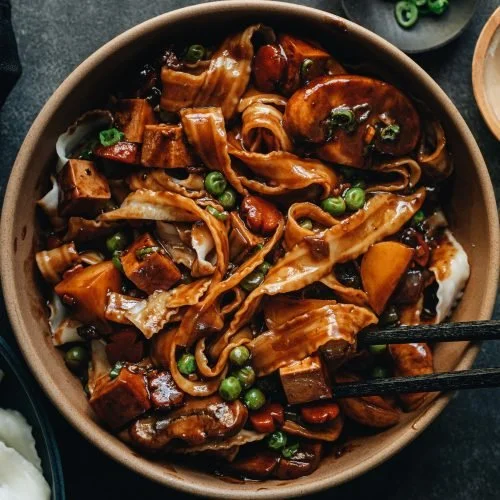
Vegan Jajangmyeon is a delightful twist on the classic Korean noodle dish that brings together the comforting flavors of black bean sauce with fresh vegetables and tofu. This easy-to-make recipe is perfect for anyone longing for an addictive, creamy, and savory dish that evokes feelings of nostalgia and warmth. Jajangmyeon is not just a meal; it’s a celebration of flavor that brings family and friends together, creating memories that last a lifetime. With its step-by-step directions, you’ll find it simple to whip up a bowl of this deliciousness in no time.
Ingredients
To make Vegan Jajangmyeon, gather these fresh, vibrant ingredients that add a burst of flavor and texture to the dish:
- 4 servings fresh wheat noodles (Korean or Chinese) for a perfect, chewy texture
- 4 tablespoons peanut oil (2 for cooking, 2 for flavor) that adds richness
- 1 cup green onion, cut into ¼ inch (½ cm) lengths (80 grams) for that aromatic crunch
- 8 ounces brown mushrooms, sliced (230 grams) that offer a savory umami flavor
- 1 cup carrot, peeled and cut into flower shapes (or diced) for sweetness and color
- ⅛ teaspoon salt to enhance all the flavors
- 1 cup potato, cut into ½ inch (1 cm) cubes (russet or Yukon, 160 grams) for heartiness
- 4 ounces baked tofu, cut into ½ inch (1 cm) cubes (115 grams) that give protein and texture
- 3 cloves garlic, minced to bring warmth and depth
- ⅓ cup Korean fermented black bean paste (jajang or chunjang) for that signature savory, sweet essence
- 2 ¼ cups water (divided into two cups + ¼ cup) to create the rich sauce
- 1 cup frozen green peas (130 grams) for a pop of color and freshness
- 2 tablespoons cornstarch to thicken the sauce perfectly
- 1 teaspoon sugar (or your choice of sweetener) for balance
- 1 teaspoon toasted sesame oil to finish the dish with nutty flavor
- ½ English cucumber, cut into matchsticks for a refreshing garnish
With vibrant, crunchy vegetables and creamy tofu, every bite will spark joy!
Step-by-Step Directions
-
Start Boiling the Noodles: Begin by filling a large pot with water and bringing it to a boil over high heat. While you’re waiting for the water to reach a rolling boil, you can multitask by preparing the sauce.
-
Sauté the Vegetables: Heat 2 tablespoons of peanut oil in a large nonstick skillet over medium-high heat. Once hot, add the green onion, brown mushrooms, and carrot. Stir them together and sprinkle with salt, allowing the mixture to cook for 1 minute before letting it sit undisturbed for 2 minutes to allow caramelization.
-
Add Potatoes and Tofu: After the caramelization process, toss in the potato cubes, baked tofu, and minced garlic. Stir fry everything for about 4 minutes, until the potato begins to look slightly translucent.
-
Incorporate the Black Bean Paste: Clear a space in the center of the skillet using your spatula. Pour the remaining 2 tablespoons of peanut oil into the space, then add the Korean fermented black bean paste. Stir it together with the oil for 1 minute to enhance the flavors, then combine it with the other ingredients in the skillet, stirring for another 2 minutes.
-
Simmer the Sauce: Pour 2 cups of water into the pan and mix well to eliminate any large lumps of black bean paste. Bring the mixture to a boil, then reduce the heat to low and let it simmer for about 10 minutes until the potatoes become tender. Make sure to stir occasionally, checking for undissolved black bean paste.
-
Cook the Noodles: As your sauce simmers, cook the fresh noodles according to the package instructions—time may vary from 1 to 12 minutes. Be mindful not to overcook them, then drain and set aside.
-
Create the Thickening Slurry: In a small bowl, whisk together cornstarch, sugar, and the remaining ¼ cup of water until smooth.
-
Finish the Sauce: After 10 minutes of simmering, check the tenderness of the carrot and potato. If they’re ready, add the frozen peas and slowly stir in the cornstarch slurry. Continue stirring until the sauce thickens, which should take about 1 minute. If the vegetables need more time, let them cook a couple more minutes before adding the slurry.
-
Add Sesame Oil: Turn off the heat and stir in the toasted sesame oil to finish the sauce, enriching its flavor.
-
Serve and Enjoy: Plate your noodles and ladle the black bean sauce over the top. Garnish generously with cucumber matchsticks. This dish can be served hot or at room temperature, making it perfect for any occasion.
Tips & Tricks
- Flavor Boost: Want to elevate the flavor? Add a splash of soy sauce or tamari when stirring in the black bean paste.
- Vegetable Variations: Feel free to experiment with seasonal vegetables like bell peppers or zucchini to customize the dish to your taste.
- Meal Prep: You can prepare the sauce and noodles separately, making it easy to reheat for a quick weeknight meal.
Serving Suggestions & Pairings
Vegan Jajangmyeon is perfect as a standalone meal, but you can enhance your dining experience by serving it alongside a fresh salad or pickled radishes for a delightful contrast. Consider pairing the dish with a light Korean pancake (pajeon) or some savory dumplings for a hearty feast. It’s great for gatherings, potlucks, or as a comforting family meal on busy nights.
Nutritional Information
This recipe serves about 4, with each serving containing roughly:
- Calories: 400-500 (varies based on specific ingredient brands)
- Protein: 15g
- Carbohydrates: 75g
- Fat: 10g
- Fiber: 8g
It’s a balanced dish full of veggies and plant-based protein, making it a wholesome meal option that satisfies hunger without feeling heavy.
Storing Tips & Variations
- Storing Leftovers: Store any leftovers in an airtight container in the refrigerator for up to 3 days. The flavors will continue to deepen; just reheat on the stovetop.
- Freezing: You can freeze the sauce for up to 2 months. Just thaw it overnight in the fridge and reheat, adding a splash of water to loosen it up.
- Variations: Feel free to swap out the tofu for tempeh or leave it out entirely for a lighter version. You can also play with the types of noodles used or spice things up by adding a sprinkle of chili flakes.
Conclusion
Making Vegan Jajangmyeon is an enriching experience that combines simplicity with incredible flavor. It’s an inviting dish that’s perfect for any occasion and will surely become a favorite in your household. Try this recipe today and share your experience with friends and family! Celebrate the joy of cooking and the delight of shared meals with this comforting dish.
FAQs
-
Can I make this dish gluten-free?
Yes, you can substitute regular wheat noodles with gluten-free noodles and check the labels on the black bean paste to ensure it’s gluten-free. -
What can I use instead of the Korean black bean paste?
If you can’t find Korean fermented black bean paste, you might try using miso paste for a similar depth of flavor, though it will change the taste slightly. -
How can I make this dish spicier?
For a spicy kick, you can add chili paste or fresh chili peppers when you sauté the vegetables, or sprinkle red pepper flakes when serving. -
Can I prepare this dish in advance?
Absolutely! The sauce can be made beforehand and stored in the refrigerator. Just cook the noodles fresh before serving. -
Is Jajangmyeon typically vegan?
Traditional jajangmyeon often contains meat or seafood. This vegan version offers all the comforting flavors without any animal products, making it a great choice for those following a plant-based diet.
Vegan Jajangmyeon
Ingredients
Method
- Begin by filling a large pot with water and bringing it to a boil over high heat.
- Heat 2 tablespoons of peanut oil in a large nonstick skillet over medium-high heat.
- Add the green onion, brown mushrooms, and carrot to the skillet. Sprinkle with salt and allow to cook for 1 minute.
- Let the vegetables sit undisturbed for 2 minutes to allow caramelization.
- Add the potato cubes, baked tofu, and minced garlic to the skillet, and stir-fry for about 4 minutes until the potato begins to look slightly translucent.
- Clear a space in the center of the skillet and add the remaining 2 tablespoons of peanut oil.
- Pour in the Korean fermented black bean paste and stir it together with the oil for 1 minute.
- Combine the black bean mixture with the other ingredients in the skillet and stir for another 2 minutes.
- Pour 2 cups of water into the pan and mix well to eliminate any large lumps of black bean paste.
- Bring mixture to a boil, then reduce heat to low and let simmer for about 10 minutes, stirring occasionally.
- Cook the fresh noodles according to package instructions, then drain and set aside.
- Create the thickening slurry by whisking together cornstarch, sugar, and the remaining ¼ cup of water until smooth.
- Check the tenderness of the carrot and potato after 10 minutes. If they are ready, add the frozen peas and slowly stir in the cornstarch slurry.
- Continue stirring until the sauce thickens, about 1 minute.
- Turn off the heat and stir in the toasted sesame oil to finish the sauce.
- Plate your noodles and ladle the black bean sauce over the top.
- Garnish generously with cucumber matchsticks. Serve hot or at room temperature.

Leave a Reply